The shortcut that loses the study
Placing the UBT251 −19.7% estimate beside retatrutide’s −17.5% estimate may look like a direct comparison. It is not. Participants were randomized within separate studies, not between these drugs. Differences in enrolled populations, regimens, analysis choices, and study settings remain entangled with the numbers.
UBT251: China obesity trial
This phase 2 trial enrolled 205 adults without type 2 diabetes in China. At week 24, the 4 mg group with an initial 1 mg regimen had an LS mean body weight change of −19.7%; placebo was −2.0%. The active arm contained 25 participants. Regimen names are trial protocol descriptions only.
See the full UBT251 table and uncertainty intervals and primary paper.
Retatrutide: separate US obesity trial
The retatrutide phase 2 study enrolled 338 US adults without diabetes. Its primary week-24 LS mean change was −17.5% for the 12 mg combined regimen and −1.6% for placebo. At the secondary week-48 timepoint, the corresponding values were −24.2% and −2.1%. These are separate timepoints within the retatrutide trial, not extensions of the UBT251 study.
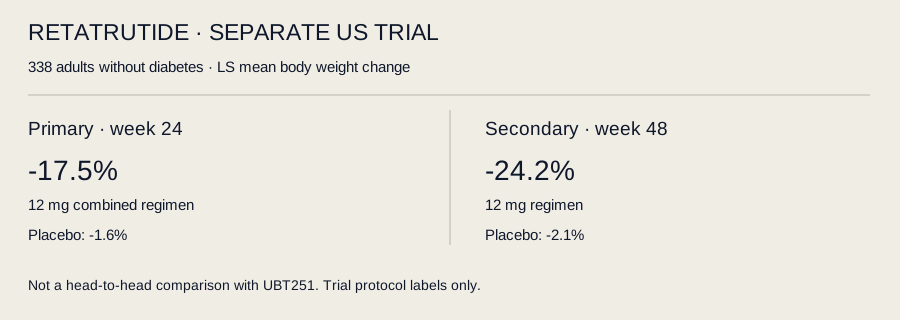
Source: Jastreboff et al., NEJM, NCT04881760. No confidence intervals are plotted here because they are not included in this site’s locked extract.
What comparison can responsibly do
Separate trials can motivate questions about study design and future research. They cannot establish UBT251 superiority or non-inferiority to retatrutide. Even a shared primary timepoint does not create a shared randomized comparison. Comparing UBT251 week 24 with retatrutide week 48 adds a time-window mismatch.
For background, CT632’s retatrutide trial review follows that study’s evidence, while PeptIQ’s introduction to retatrutide explains the research context. PeptIQ is a companion editorial brand; these links are context, not independent confirmation of comparative efficacy.